MCB (wood veneer) SUPPLIES
TO THE TRADE & D I Y

how to order
Please click anywhere on this text and state your requirements in the input box,
we will then email you a pro forma invoice.
Once you are in receipt of the pro-forma, follow the instructions regarding payment.
Goods will normally be dispatched within 48 hrs of receipt of your remittance
unless prior notification of delay has been forwarded.
Minimum order for cut sheet veneer within the UK is £10.00 per species or one sq ft whichever is the greater
Minimum order for cut sheet veneer outside the UK is £25.00 per species or one sq ft whichever is the greater
All raw wood veneers are sold by the square foot at sheet width
Iron on veneers are sold by the full sheet only
All carriage rates quoted
on this site or in any communication are forthe UK mainland only unless otherwise stated
Veneering tips & hints
First, select the wood veneer you require according to colour and grain type. Remember sheet veneers are only as wide as the trees from which they are cut, and species of trees vary enormously in size. It would be impossible to purchase a sheet of Apple wood veneer 600mm wide but feasible if the sheet was, instead, Mahogany veneer.
When contacting your suppliers ask about the wood veneer supplies they have in stock to accommodate your specific requirements.
If you have a large area to cover it is possible to use book-matched or mirrored veneers. These are wood veneer sheets cut from the same source, one after the other, with the result that as many as four sheets may be obtained, which are to all intents and purposes identical to one another. They are then used in the same way as one would open the pages of a book until the desired pattern is achieved. When placed together in the right way four single leaves of wood veneer as shown below

can be made up into any one of these symmetrical variations by stitching together using veneer tape on the face side, this can be purchased from any good sundries supplier and will be removed in the flatting down process prior to finishing


Often this process is applied when using Burr wood veneers due to their smaller size, as one would not expect to obtain a single Burr wood veneer of more than six square feet.
Burr wood veneers by their very nature are irregular in shape and size so it is virtually impossible to obtain Burr wood veneer supplies of the exact size you require.
You may be able to purchase Burr wood veneer cut to a particular size but remember you will still have to pay for the complete Burr as any surplus left would be of very little use to companies that are wood veneer suppliers.
It is always preferable to buy the complete piece and cut it to your own requirements. This means that you can select the best pattern for your needs, and still have pieces remaining which may be large enough for a small project.
Waste is usually inevitable when using Burr wood veneers.
![]()
When cutting any wood veneer always allow a minimum of three millimetres overlap to every edge. If you are working on a piece that requires edging strips don't forget to add this to the size when purchasing your veneer sheet from your wood veneer suppliers.
It is always better to cut your own edging from the top sheet in order to achieve a matching grain to the edges of your piece.
Always apply edging before applying the top sheet, you do not want to see a joint, no matter how small, on the main surface of your work.
The next thing to think about is fixing the wood veneer and deciding which glue/method to use. This will depend on conditions and the material.
Using Glue film hot melt adhesive is an easy option but it is only suitable for use on 0.6mm - 0.8 mm veneers.
It is an 'iron-on' film which is applied to the article you are veneering using a very hot iron, after which the wood veneer of your choice is itself 'ironed ' on to the glue film.
When applying wood veneers using glue film it is advisable to use a sheet of brown wrapping paper between the veneer and the iron to avoid scorching.
The setting time is practically instant depending on the temperature of the actual glue. If one follows the hot iron instantly applying firm pressure (imitating an ironing action) with a cold heavy metal object (such as the face of a carpenter's jointing lump hammer) as one goes,
not only is the curing process instant, but bubbles or wrinkling can be eliminated.
Iron-on Glue film is also very economical because even small pieces can be patched together to cover large areas.
When using contact adhesives on veneer above 0.6mm - 0.8 mm It will have to be applied to both surfaces which are allowed to dry before being put together.
Because when both surfaces come into contact with each other they form a bond it is important not to let this happen until you are absolutely sure you have your wood veneer positioned correctly. One way of achieving this is to place some narrow strips [40 mm wide] of veneer or stiff card on the surface of the article being worked on, about 25 mm apart, and starting about 25 mm in from the end on which the work is commencing.
Place your sheet of wood veneer over the strips and position it accurately. When happy that the wood veneer is in the right place allow one corner to touch and apply pressure carefully. Go along the end repeating this action until you have one end firmly secured.
Check that the wood veneer is still aligned. If so, remove one of the strips and, ensuring that there are no bubbles or wrinkles, stick it down by applying pressure. Repeat this action until all the thin strips have been removed.
The final stage is the finishing of the article.
One method of obtaining a good finish is to obtain some shellac sealer, coat all surfaces with the shellac sealer, wait until they are completely dry and then flat down with a fine abrasive silicone carbide paper. I would not use anything coarser than a 320 grit. Keep sealing and then flatting down until a satisfactory ground is achieved and ready to accept the finish of your choice, i.e. wax polish, French polish etc.
![]()
There are many ways of enhancing your work using Inlay bandings, Boxwood & Ebony lines, marquetry panels or a Marquetry inlays.
The use of Boxwood & Ebony lines is useful in highlighting
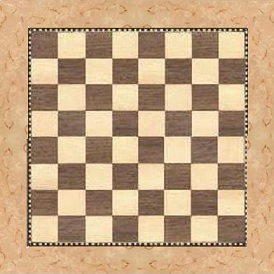
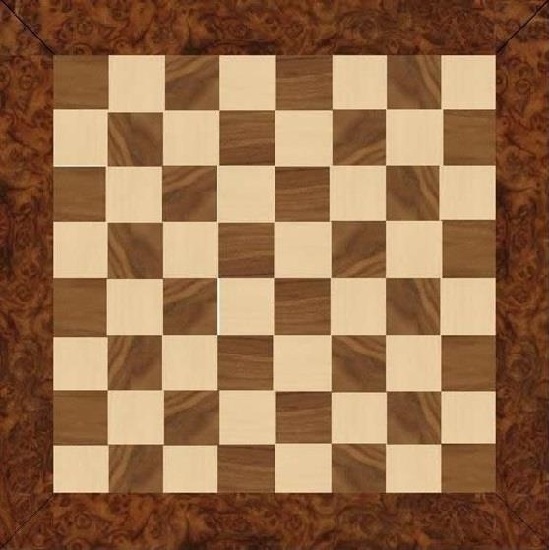
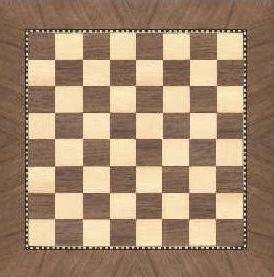
small profiles such as chair legs or rails whereas inlay bandings are useful when borders are required for Chess & Backgammon lay on panels as seen here

Small Marquetry inlays like this can be used as center or corner pieces to decorate boxes etc

when applying wood veneer
All that is required is a little knowledge
and a great deal of patience .
© C. Pascoe MCB Supplies